Buyer guide
Thermal Paper Roll Sizes Explained
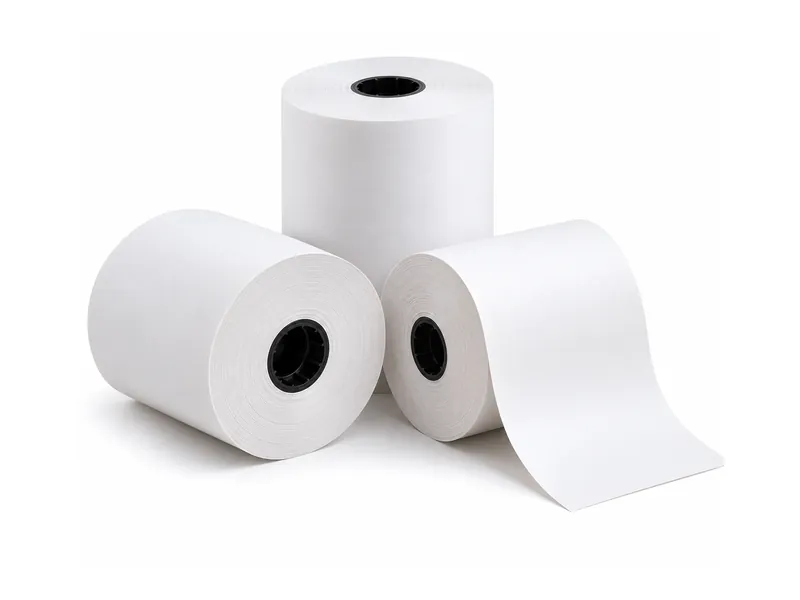
Ordering the wrong receipt roll is a common, expensive mistake: rolls that are too wide won't fit, rolls that are too large won't close in the printer, and the wrong paper can fade. This guide explains how thermal rolls are sized and how to choose the right one.
How thermal rolls are specified
Every roll is described by three numbers:
- Width: the width of the paper, for example 3⅛" (80 mm) or 2¼" (57 mm).
- Length or diameter: in the US, usually the length in feet (for example 230'); elsewhere, often the roll diameter in millimetres (for example 80 × 80 mm means 80 mm wide and 80 mm in diameter).
- Core: the inner tube, most often ½" (12 mm). Some rolls are coreless.
Common sizes and where they're used
| Width | Typical use |
|---|---|
| 3⅛" (80 mm) | Standard POS receipt printers in retail, restaurants and gas stations. Common sizes: 3⅛" × 230', 80 × 80 mm. |
| 2¼" (57 mm) | Card payment terminals, mobile and handheld printers. Common sizes: 2¼" × 50', 57 × 40 mm. |
| 1¾" (44 mm) | Compact printers and some calculators and devices. |
| 1" (25 mm) | Small handheld and specialist devices. |
Custom widths and lengths can be slit to order for kiosks, queue systems, scales and other equipment.
How to measure your roll
- Measure the width of the paper with a ruler.
- Measure the outside diameter of a full roll, or check the maximum diameter in your printer manual.
- Measure the inner diameter of the core.
- Note the printer or terminal make and model. That alone usually identifies the right roll.
Thermal or bond paper?
Thermal paper has a heat-sensitive coating that darkens where the printhead heats it, so no ink or ribbon is needed. Most POS printers and card terminals use thermal paper. Bond paper is plain paper for impact printers that print through an ink ribbon. These are often used in hot kitchens, where heat can darken thermal paper.
BPA-free thermal paper
Many retailers and food-service businesses now ask for BPA-free thermal paper. In the European Union, BPA in thermal paper has been restricted since January 2020. If you sell into Europe or supply food service, specify BPA-free paper in your order.
Storing rolls and receipts
Thermal paper reacts to heat and light. Store rolls in a cool, dry, dark place in their cartons, and keep receipts away from heat, sunlight and plastic sleeves if you need them to stay legible.